
In a context where ophthalmology clinics are increasingly in demand in Switzerland, reducing wait times has become essential. In addition to improving patient satisfaction, it also helps lighten your daily workload without increasing costs by hiring more staff. In this article, we propose five concrete approaches to streamline your practice.
Ophthalmology clinics under pressure
In Switzerland, 4 out of 5 people now need glasses according to a study by OPTIQUESUISSE, compared with about 60% in 2021. This rapid change is largely due to our increasingly digital lifestyle marked by heavy use of smartphones and screens, as well as an aging population. Added to this growing demand are a shortage of qualified staff and increasing administrative burdens, which are part of the current challenges in the Swiss healthcare system. It is therefore essential to find ways to reduce wait times and workload effectively.

The 5 strategies to reduce wait times in ophthalmology
1. Structure internal organisation to avoid wasted time
One of the first actions to reduce waiting time in your ophthalmology practice is the structuring of internal procedures. This step is often underestimated, yet it allows you to have better time management daily. It is important that everyone knows what they need to do during the day.
Clear and regular communication within the team is essential here. You could, for example, implement:
- Short morning or end‑of‑day briefings to define who does what
- Use of standard reporting templates for recurring situations
- Note recurring delays (types of consultations, times) and adjust continuously

2. Implement staged appointments to optimise your time
For many ophthalmologists, a large part of the consultation is still devoted to steps that can be completed before the medical examination itself.
In practice, certain tasks can be handled upstream by optometrists, medical assistants, or reception staff working with you, such as:
- Pre‑consultation questionnaires
- Auto‑refractor measurements
- Vision testing
This is where the concept of staged appointments comes into play: your patient books a slot and several appointments appear in the calendars of you and your team. You focus on the steps that require your expertise and the patient journey becomes smoother and the day more structured for the team.

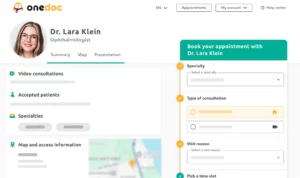
Discover our tools to reduce wait times in ophthalmology clinics
3. Reduce no‑shows to free up useful time
So that your staff can help you with tasks that don’t require your expertise, they need to have the time. One of the biggest drains on an ophthalmology practice’s efficiency is no‑shows.
A patient who doesn’t show up without notice can create a gap in your schedule and disrupt the whole day. Don’t hesitate to send a confirmation email for every appointment — the patient can easily add it to their calendar. Additionally, automated SMS reminders 24 hours before the consultation help drastically reduce no‑shows without extra work for your team.
 OneDoc tip: be clear about your no‑show policy.
When setting up your consultation types, add a pop‑up to explain your no‑show policy.
4. Use the full potential of your medical software
Good medical software is a true ally in daily practice. Whether you use systems like Liris, Oplus or Eyesoft, many advanced features can save you time daily.
For example, with scheduling you can adjust consultation durations by type and clearly visualise the different stages of care. In practice, this helps better anticipate busy days and avoid the knock‑on delays that accumulate through the schedule.
Another often under‑utilised lever is the interoperability with devices and external tools. When data from imaging or measurements is directly integrated into the patient record, the risk of input errors decreases and administrative time is reduced.
Finally, integration with an online appointment solution like OneDoc takes it further. Appointments made by patients are automatically synchronised with your medical calendar, with no double entry or duplicates. The result: an up‑to‑date schedule, better visibility on patient flow, and less time wasted on purely administrative tasks.
5. Better anticipate each appointment
Before even talking about wait times in your ophthalmology clinic, it’s essential to revisit your appointment system to avoid schedule imbalances and peak congestion. We recommend creating:
- Specific appointment types with defined durations
- Clear labels to help patients choose the correct type
- Buffer slots for emergencies or last‑minute adjustments
This allows you to better anticipate each appointment and avoid delays thanks to a clearly structured schedule.
Online appointment booking — a real bonus for patients
Additionally, online appointment scheduling is no longer an option but a standard expected by patients, as shown in our study in collaboration with MIS Trend and Farner. With solutions like OneDoc, you can offer patients the ability to book consultations 24/7, directly from your profile or website. This flexibility not only reduces time‑consuming phone calls for your team but also helps optimise availability according to consultation needs.
Save time for your ophthalmology clinic and your patients
Without hiring additional staff, you can act effectively through structured approaches, better organisation and appropriate tools.
By optimising appointment booking, rethinking internal processes, and leveraging well‑integrated digital solutions, you can quickly see a noticeable improvement in patient flow and a reduction in waiting times.