Are you looking to equip your physiotherapy practice with high-performance equipment? In this guide, discover the priority purchases (treatment tables, strengthening, balance, physical agents, cardio) and the digital tools that improve your patients’ care: online appointment booking, reminders, and billing.

The essential equipment to start in physiotherapy
To ensure effective care, some equipment is indispensable. It will allow you to offer personalized treatments for different types of patients. Here is a list of equipment to have in your physiotherapy practice and the points to consider before purchasing:
1. Treatment tables and practice furniture
Indispensable for any practice, treatment tables provide a comfortable surface for patients during manual therapies, exercises, or other treatments.
Before buying, make sure the table meets your needs:
- Electric height adjustment
- Load capacity
- Height range
- Suitable size (if you work with children or larger-bodied people)
- Multi-position headrest
- Robust frame
- Braked castors
2. Exercise and strengthening equipment
Movement is central to rehabilitation. The following tools enable a wide range of resistance exercises, helping to strengthen muscles during rehab.
- Bands/tubes: progressive for analytical work and closed-chain exercises
- Stability balls: med balls and pads for core stability and motor control
- Dumbbells and weights: (wrist/ankle weights, light kettlebells) for fine progressions
- Rollers and balls: for self-massage, mobility, and recovery
3. Equipment for proprioception, balance and coordination
The following tools are essential after a sprain, lower-limb surgery, or for older adults to restore stability and reduce fall risk.
- Unstable supports: balance boards (Freeman), discs, and domes/BOSU
- Coordination: with agility ladders, cones, and a step, you work on cadence, precise foot placement, and changes of direction. The goal is to regain fluid and safe movements in daily life and in sport.
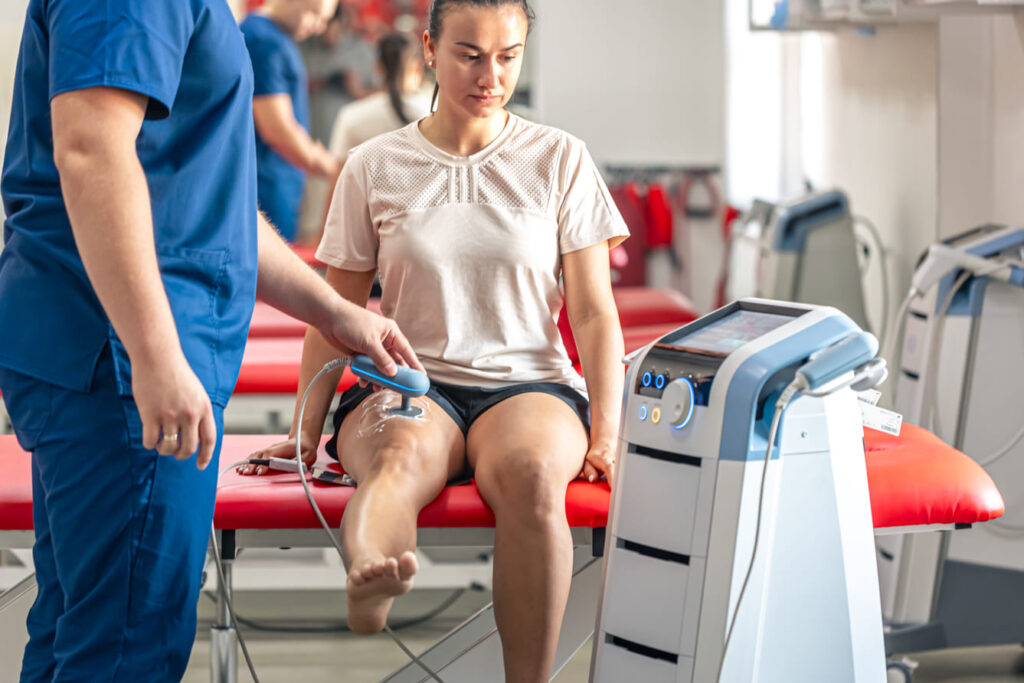
4. Equipment for electrotherapy and physical agents (TENS, ultrasound, shockwave)
Use the following tools as indicated, to complement manual therapy:
- TENS/NMES: Ideal for pain relief and targeted neuromuscular training.
- Therapeutic ultrasound: Perfect for deep tissue treatment; has anti-inflammatory and relaxing effects and speeds up soft-tissue healing.
- Shockwave therapy: Helps quickly relieve pain and accelerate recovery.
Key points to consider when using physiotherapy equipment
Since these tools are electronic, remember to plan for:
- A maintenance plan
- Regular calibration
- Managing consumables stock
Equip your physiotherapy practice with these modern features

5. Cardio machines and sports rehabilitation
To help your patients return to sport, you can support them step by step with these machines:
- Treadmills
- Indoor bikes
- Rowers
Points to consider before buying sports machines for physiotherapy
- Emergency stop: for the treadmill to prevent accidents.
- Built-in measurements: if you do not use other measuring devices
- Dedicated space: plan a large enough area for the machines you want to buy.
Note that these are among the most expensive items on the list and are not as essential as the first ones presented. These machines are a good addition if you have enough space and work in a group practice.
6. At-home physiotherapy equipment
Home care has become a popular option with the rise of telemedicine. You can suggest to your patients:
- Resistance bands
- Balance boards
- Exercise kits
This way, your patients continue their rehabilitation at home, ensuring regular follow-up and faster progress.
Encourage your patients to equip themselves with these devices to maximize the benefits of their rehab exercises between in-clinic appointments.
7. High-performance digital tools
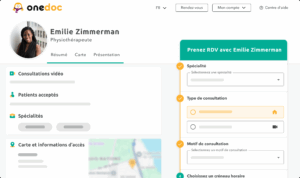
The “equipment” of a modern practice is also digital. This simplifies patient follow-up while offering a modern care experience. The following tools are directly integrated into OneDoc:
- 24/7 appointment booking: Your patients book in a few clicks, day or night, from your website or a directory like OneDoc. This reduces non-essential incoming calls and fills your slots faster.
- Email confirmations and automatic SMS: Your team spends less time on follow-up tasks that can be automated. Patients receive an email confirming their appointment (which they can add to their calendar) and an SMS reminder 24 hours before the appointment, reducing no-shows.
- Resource management: Automatic allocation of rooms, devices, and teams at the time of booking. Each resource’s availability is checked before validation and appointments are added directly to the respective calendars.
- Billing with Tarif 311/312: Create compliant invoices and send them to insurers (LAMal, UV, IV, MV) in a few clicks. Choose between third-party payer via MediData or third-party guarantor depending on the service. We also support the Covercard system to spare you manual entry of patient data.
- Enhanced online visibility: Grow your presence online and on Google and appear on our partner platforms to capture local demand.
- Secure teleconsultation: Follow your patients remotely (therapeutic education, check-ups) with a Swiss-hosted solution compliant with the nFADP.
Bonus: New technologies and virtual reality
Physiotherapy is evolving rapidly, with new technologies revolutionizing care. Staying up to date with these innovations is essential to meet your patients’ expectations.
- Virtual reality: Used to create interactive environments, it is particularly effective for the rehabilitation of patients with neurological disorders or balance issues.
- Robotic devices: These tools help retrain movement after a stroke or severe injury, enabling faster and more effective recovery.
Where to buy physiotherapy equipment in Switzerland?
- Chattanooga: High-tech solutions such as electrotherapy and ultrasound devices.
- Gymna: Known for robust treatment tables and reliable equipment.
- BTL: A wide range of rehabilitation devices, especially for electro- and magnetic therapy.
Tip: Prioritize suppliers who offer installation, training, and maintenance contracts. Also compare financing options (leasing, hire-purchase) according to the funds you have allocated in your business plan.
New or second-hand physiotherapy equipment: what’s best for your practice?
Although buying new physiotherapy equipment may seem ideal, it is not always the most economical solution. When starting your practice, many costs add up — second-hand equipment can therefore be a more affordable option.
- Savings: Purchasing second-hand equipment can lower your start-up costs while still obtaining high-quality devices.
- Sustainability: Reusing devices contributes to a more sustainable approach, reducing waste while effectively equipping your practice.
If you opt for second-hand equipment, be sure to choose reliable suppliers and check that devices meet current safety and performance standards.