Are you a dental hygienist and looking to practise in Switzerland? Whether you have just obtained your diploma, are considering working as an employee or as an independent practitioner, or are planning to move from abroad, a practice authorization is required in most cantons. This article guides you through the essential steps to obtain your authorization to practise as a dental hygienist in Switzerland.
Why is the practice authorization essential for Swiss dental hygienists?
In most Swiss cantons, the dental hygienist profession is among the regulated healthcare professions. In practice, this means you are not legally allowed to work under your own professional responsibility without an authorization issued by the cantonal authorities.
 Good to know: Basel-Stadt, Lucerne, Appenzell Innerrhoden, Graubünden and Solothurn do not always require authorization for employed dental hygienists if another professional (a hygienist or dentist) assumes responsibility and supervision.
Beyond the administrative aspect, an authorization reassures your patients, facilitates relationships with insurers and other healthcare professionals, and opens doors to collaborate with dental practices or clinics across Switzerland.
What are the requirements to obtain an authorization to practise as a dental hygienist?
In Switzerland, healthcare is primarily a cantonal responsibility. As a result, each canton has its own procedures, required documents and administrative fees. However, as a dental hygienist, you will encounter almost the same requirements everywhere, including:
- Holding a recognized dental hygiene diploma
- Submitting an application to the competent cantonal authority
- Providing a complete administrative file
1. Hold a recognized dental hygiene diploma
If you obtained your diploma in Switzerland (ES dental hygienist diploma registered with the SRC), your title meets Swiss standards and you can apply for authorization. If your diploma was obtained abroad, an official recognition will be required before you can submit your cantonal application.
Recognition of foreign dental hygiene diplomas: how it works
If your diploma was obtained outside Switzerland, recognition of your qualification is a central step, usually required before you can apply for a cantonal authorization. In most cases, two institutions are key:
- The State Secretariat for Education, Research and Innovation (SERI): the federal body responsible, among other things, for recognizing foreign professional qualifications.
- The Swiss Red Cross (SRC): responsible for the recognition of certain healthcare professions, including dental hygiene, according to current regulations.
If you come from a country of the European Union (EU) or the European Free Trade Association (EFTA), you may benefit from the free movement of persons, provided your diploma is validated and you comply with administrative requirements (residence permit, work authorization, etc.). Before starting any cantonal process, make sure your diploma has been federally recognized and, if necessary, request an official recognition certificate.
2. Submit an application to the competent cantonal authority
Depending on the canton, the competent authority may be the Office of the Cantonal Medical Officer, the Public Health Department, the Gesundheitsamt or another official unit. Most cantons provide a form—online or downloadable—along with a list of required documents. You will find a list of all cantons and their official application portals at the end of the article.
3. Submit a complete administrative file
The documents required vary slightly from one canton to another, but generally include:
- Copy of the diploma or SRC recognition certificate (for foreign qualifications)
- Updated CV
- ID document and, if needed, residence or settlement permit
- Recent criminal record extract (Swiss or from country of origin)
- Certificate of good conduct issued by the health authorities of the country or canton where you previously practised
- Medical certificate confirming your fitness to practise
- Proof of professional liability insurance
- Sometimes a language certificate (B2 level in the canton’s language)
What are the timelines and costs for applying for authorization as a dental hygienist?
Cantons charge administrative fees for processing your application. In practice, plan for:
- Cost: CHF 200 to CHF 800
- Processing time: 2 weeks to 2 months
For a more precise estimate, we recommend visiting your canton’s website.
 Tip: apply early—ideally before you arrive in Switzerland or before your planned start date—especially if your diploma requires recognition.
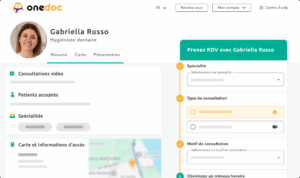
OneDoc supports you in launching your new dental hygiene practice

The 7 steps of the cantonal authorization procedure
Once your diploma (Swiss or recognized) is in hand, you can begin the authorization process in the canton where you plan to work. To do so:
1. Choose your canton of practice
If you work in several cantons, you may need to submit an application in each one or benefit from a simplified procedure based on an existing authorization.
2. Consult your canton’s page dedicated to dental hygienists
Your canton’s health authority website usually provides full instructions, required documents and forms.
3. Fill out the application form
Specify:
- Your practice type (independent or employed)
- Your professional contact details (practice address, employment rate)
- Any specific aspects of your practice (radiology, advanced prophylaxis, etc.)
4. Attach the required documents
Diploma or SRC recognition certificate, identity documents, criminal record, medical certificates, liability insurance, etc.
5. Send the application and pay the fee
The file is usually submitted electronically (online portal or secure email) or by postal mail depending on the canton. Some cantons have dedicated platforms that simplify the process. Make sure to pay the fee as well.
6. Respond to any requests for additional information
It is common for authorities to request clarifications or additional documents, especially if you have an international background.
7. Receive the authorization to practise
Once approved, you will receive your practice authorization, sometimes along with registration in a cantonal or national register. Keep this document safe: employers, insurers or partners may request it.
From administration to operations: how OneDoc supports dental hygienists in Switzerland
Once your practice authorization is obtained, the real work begins… and the admin too! This is where OneDoc can truly make a difference in your daily routine thanks to our all‑in‑one solution for dental hygienists.
Online agenda, reminders and schedule optimization
OneDoc Pro integrates into your organisation to help you manage your schedule efficiently:
- Online medical agenda, accessible anytime, anywhere
- Automatic SMS reminders to reduce no-shows
- Advanced configuration of appointment types: scaling, follow-up check, long/short sessions, new patients, etc.
24/7 online booking and increased visibility
With OneDoc Pro, your patients can:
- Book appointments online 24/7
- Book from your website via the widget, your OneDoc profile or even Google Maps
- Modify, reschedule or cancel appointments on their own, according to the rules you define
You save time, reduce interruptions during treatments and increase your visibility among patients looking for a dental hygienist in Switzerland.
Combined hygienist / dentist appointments
If you work in a dental practice, OneDoc allows you to set up care protocols (dentist + dental hygienist) thanks to advanced scheduling features:
- Coordination of time slots between the dentist and the dental hygienist
- Simplified patient pathway with a single appointment for multiple services
- Optimized time management for the entire team
SDH tariff invoicing
If you are an independent dental hygienist, OneDoc Invoice allows you to manage your invoicing directly within OneDoc Pro:
- Invoicing based on the tariff recommendations of Swiss Dental Hygienists (SDH)
- Secure sending of invoices to patients
- Management of payment reminders
- Bank reconciliation to keep an overview of your invoicing without manual checks
Start your career as a dental hygienist
You now have all the keys to prepare your application and practise legally. Obtaining a dental hygienist practice authorization in Switzerland may seem complex due to cantonal variations, but by following the steps described in this article and consulting your canton’s authorities directly, you will put all the chances on your side.
If you have any doubts, don’t hesitate to consult official canton websites or contact the health authorities directly. They are there to guide you through the process.
Cantonal resources for practising as a dental hygienist
German‑speaking cantons
- Appenzell Ausserrhoden: Fachstelle Gesundheitsfachpersonen, Amt für Gesundheit – ar.ch
- Appenzell Innerrhoden: Gesundheitsamt – ai.ch
- Aargau: Departement für Gesundheit und soziales – ag.ch
- Basel-Landschaft: Amt für Gesundheit – www.baselland.ch
- Basel-Stadt: Medizinische Dienste des Gesundheitsdepartements Basel-Stadt – bs.ch
- Bern: Gesundheits-, Sozial- und Integrationsdirektion des Kantons Bern (GSI) – gsi.be.ch
- Glarus: Finanzen und Gesundheit – gl.ch
- Graubünden: Gesundheitsamt Graubünden – gr.ch
- Lucerne: Dienststelle Gesundheit und Sport – gesundheit.lu.ch
- Nidwalden: Gesundheitsamt – nw.ch
- Obwalden: Gesundheitsamt – ow.ch
- St. Gallen: Gesundheitsdepartement – sg.ch
- Schaffhausen: Gesundheitsamt – sh.ch
- Schwyz: Amt für Gesundheit und Soziales – sz.ch
- Solothurn: Gesundheitsamt – so.ch
- Thurgau: Amt für Gesundheit – gesundheit.tg.ch
- Uri: Amt für Gesundheit – ur.ch
- Zug: Medizinische Abteilung – zg.ch
- Zurich: Gesundheitsdirektion – zh.ch
French‑speaking cantons
- Fribourg: Service de la santé publique – fr.ch
- Geneva: Service du médecin cantonal – ge.ch
- Jura: Médecin cantonal – jura.ch
- Neuchâtel: Service de la santé publique – ne.ch
- Vaud: État de Vaud – Office du médecin cantonal – vd.ch
- Valais: Département de la santé, des affaires sociales et de la culture – vs.ch