In Switzerland, dermatology teleconsultation is no longer just a trend: it has become a central pillar of healthcare services. In this article, we guide you through the key aspects of telemedicine in dermatology: when to use it, the legal framework, and the impact of the new TARDOC tariff system.

Why teleconsultation is well-suited to dermatology
From the very first patient interactions, dermatology relies heavily on visual assessment—which can be easily carried out remotely.
In teledermatology, you can:
- Assess skin lesions from high-resolution images
- Discuss symptoms directly with the patient
- Adjust an ongoing treatment
- Determine whether an in-person follow-up is necessary
This ability to combine flexibility with medical rigour can not only simplify your consultations, but also provide greater convenience for your patients.
Different formats: synchronous or asynchronous teleconsultations, and when to use them
When it comes to teledermatology, it’s important to distinguish between two main types of remote consultations:
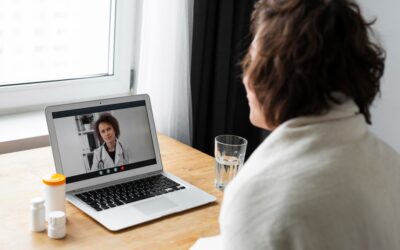
- Synchronous video teleconsultation, where the dermatologist and patient interact in real time via videoconference. This format is particularly useful for interactive discussions, live explanations, and immediate clinical decisions.
- Asynchronous teleconsultation, which involves sending high-quality photos along with a detailed questionnaire. The dermatologist then reviews the materials at their own pace and responds with a diagnosis or recommendation.
Each method has its advantages depending on the clinical context: asynchronous consultations can be ideal for follow-ups or initial reviews of common lesions, while synchronous sessions are best suited for cases requiring a more in-depth dialogue.
When to offer a dermatology teleconsultation?
Teleconsultation is not only a service appreciated by patients, it’s also a great way to optimize care delivery without compromising on quality. Teledermatology is especially suited for:
- Follow-up consultations for stabilized chronic conditions
- Prescription renewals for simple treatments
- Post-treatment check-ups
- Assessing skin rashes or mild acne
- Therapeutic adjustments
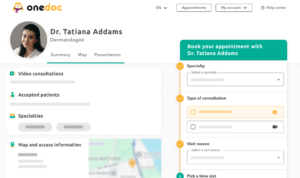
Explore OneDoc's tools loved by dermatologists

When is an in-person dermatology consultation more appropriate?
While telemedicine in dermatology brings many benefits, it clearly does not replace traditional clinical examinations. Certain procedures require the patient to be physically present:
- Detailed dermatoscopic examinations
- Skin biopsies
- Surgical or ablative treatments
- Aesthetic procedures requiring physical contact
The key is to assess each case individually. A remote consultation can be a great way to triage and redirect patients, identifying who truly needs an in-person session.
Tangible benefits of dermatology teleconsultations
Teledermatology offers multiple advantages for both your dermatology practice and your patients.
For you, as a dermatologist, it helps:
- Simplify administrative tasks and reduce unnecessary appointments
- Save time without compromising clinical quality
- Better manage your schedule with integrated solutions like OneDoc Visio, which syncs directly with your calendar
For patients, being able to consult remotely means:
- Fewer unnecessary trips
- Easy access to a specialist
- Quicker contact with their dermatologist—especially in urgent or question-based cases
Legal framework in Switzerland: obligations, data security and TARDOC
In Switzerland, telemedicine is subject to the same obligations as in-person consultations. This means all consultations must:
- Comply with the physician’s duty of care (LPMéd)
- Respect medical confidentiality (Criminal Code)
- Be in line with the Federal Act on Data Protection (nLPD)
 Good to know: Avoid using general video tools for medical consultations
Many tools are available for remote dermatology consultations. However, to meet Swiss data protection and security standards, we recommend avoiding general-purpose tools like Zoom or Google Meet.
These platforms were not specifically designed for medical use and cannot guarantee that only those directly involved in the patient’s care will have access to the consultation. In addition, the data exchanged may transit through or be hosted on servers outside Switzerland.
How does TARDOC impact teledermatology?
The introduction of TARDOC marks a turning point: services are no longer simply billed as phone consultations but have dedicated telemedicine codes, giving you a clear structure for invoicing.
Towards a hybrid, patient-centred dermatology
Teleconsultation in dermatology is a natural evolution of medical practice. When used wisely, it allows you, as a dermatologist, to offer more flexible care—while staying aligned with today’s clinical and legal standards.